Test Center for Innovative Port and Cargo Handling Technologies
Logistics is a key industrial sector in Germany, and particularly in North Rhine-Westphalia, where many companies operate and many people are employed. By global standards, logistics in North Rhine-Westphalia is regarded as a benchmark for performance and efficiency. Infrastructure plays a central role in this context. To maintain and even strengthen this excellent position, continuous innovation and steady progress are essential.
The DST and the Chair of Mechatronics at the University of Duisburg-Essen have joined forces to advance research on the logistics infrastructure of the future through the Test Center for Innovative Port and Transshipment Technologies. The new research infrastructure will primarily focus on the research areas of port logistics and land-based activities in inland waterway transport.
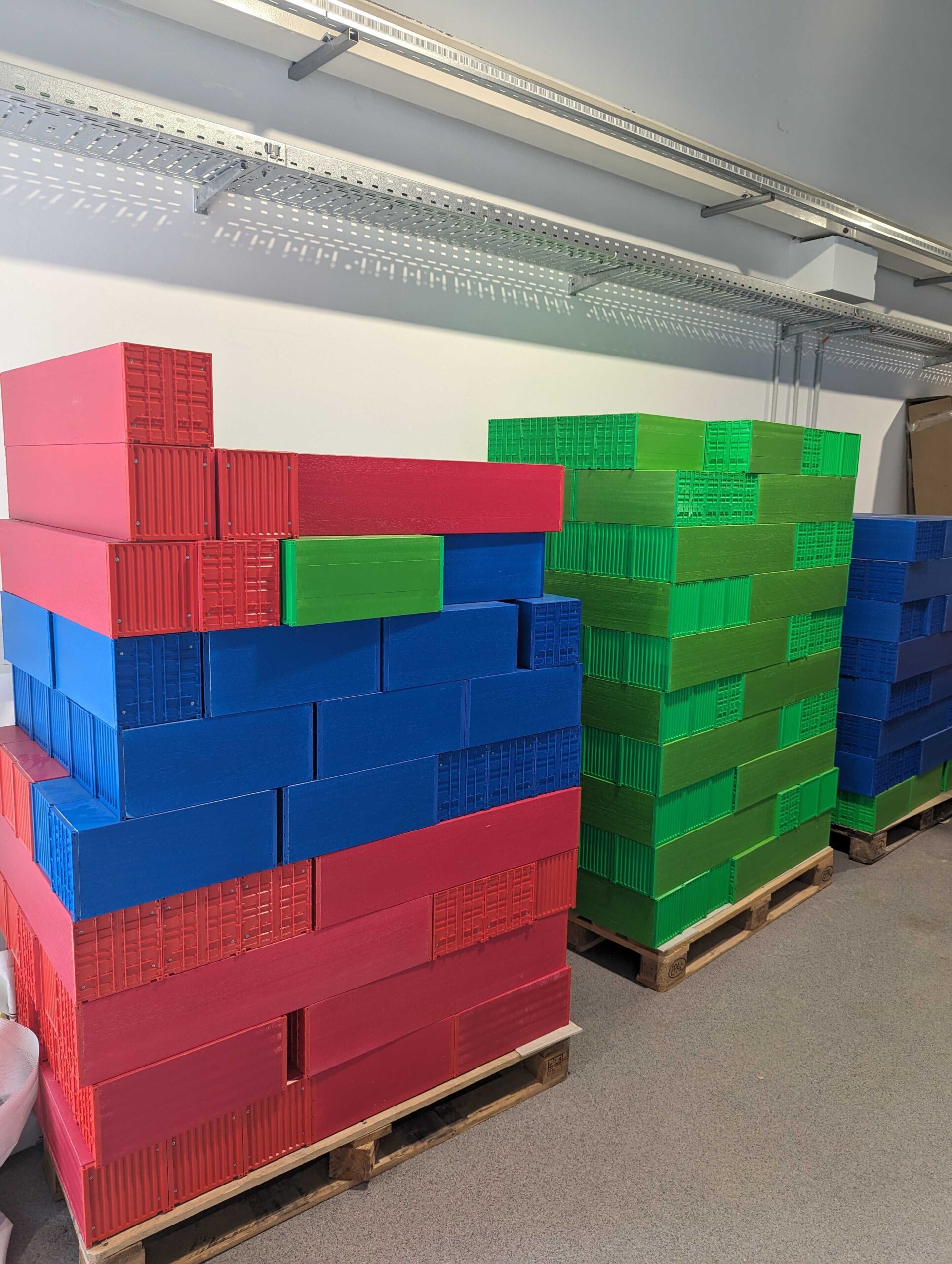
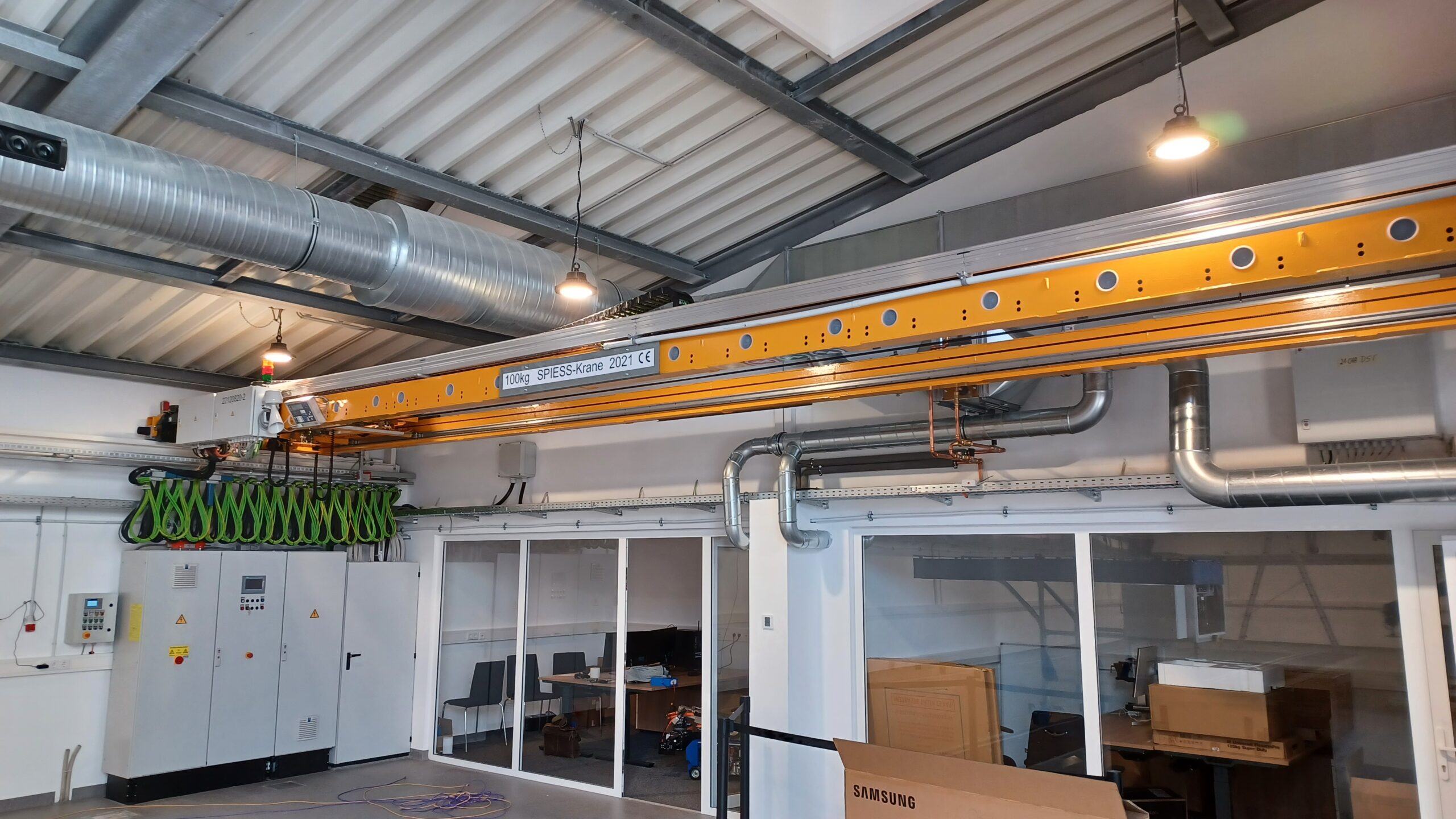
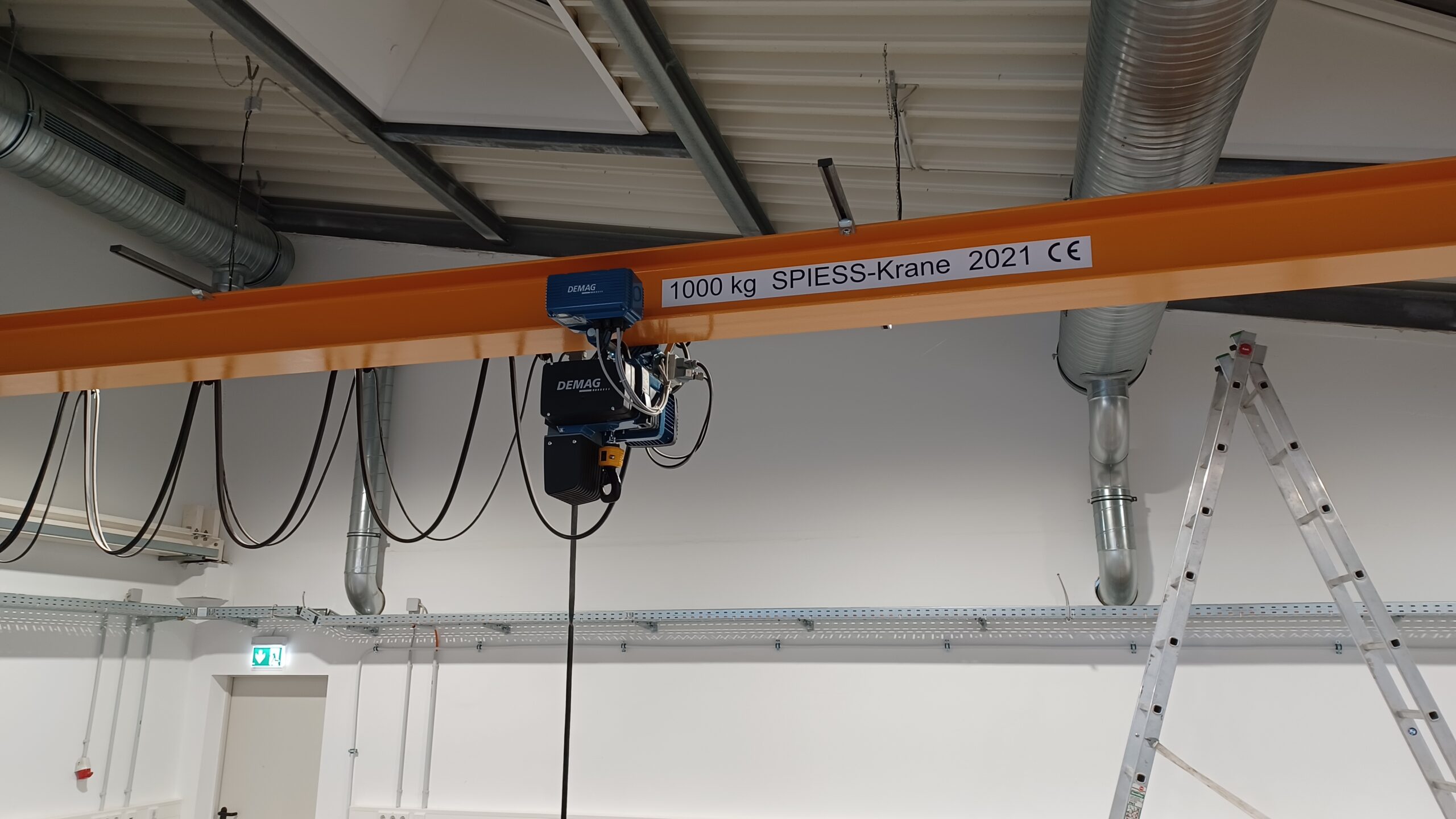
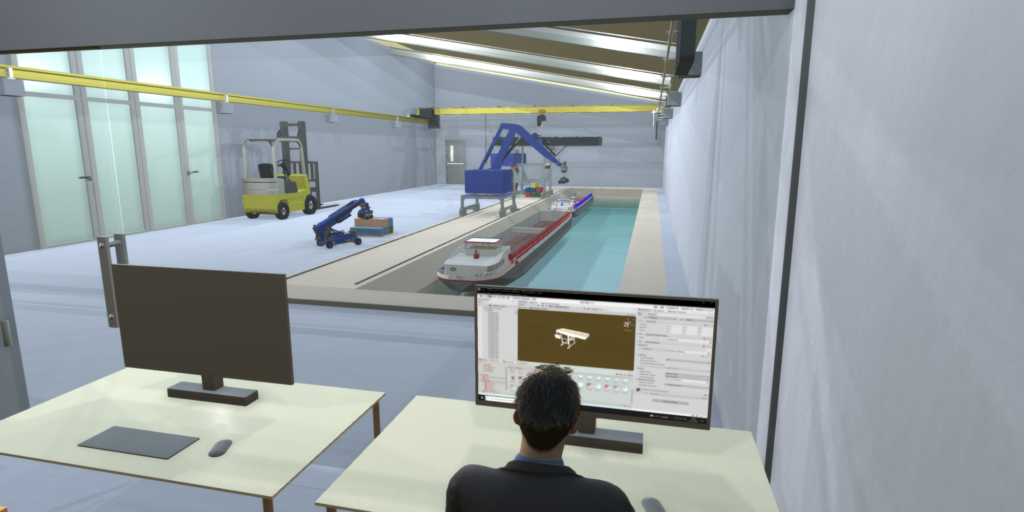
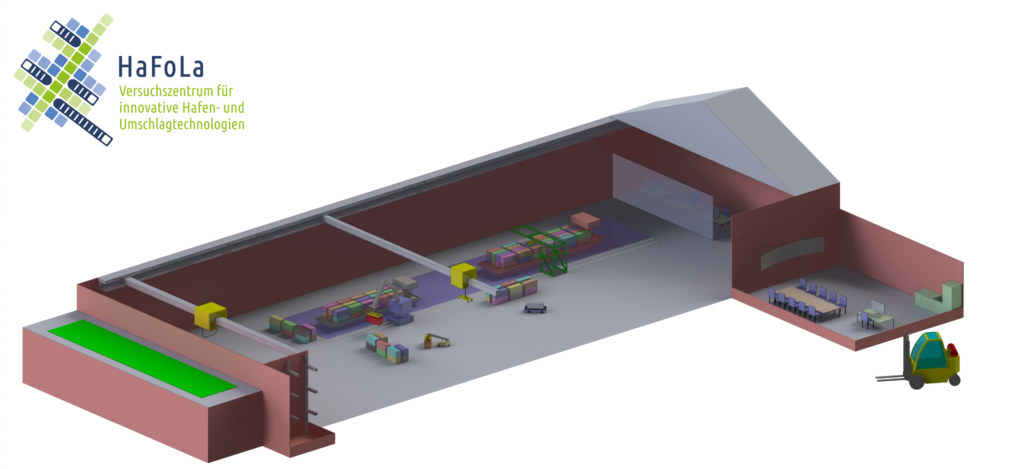
The test center features a test hall that replicates the topography of a port. In addition, the associated crane and cargo-handling infrastructure has been set up for use in test runs, and the necessary container and ship models are available. The test center also includes a model warehouse for weather-protected storage of the models, as well as the “Digital Port” Living Lab, an experimentation and interaction space for hardware and software developments within the framework of future digitalization projects. Both spatially and thematically, the test center for innovative port and transshipment technologies is located in close proximity to the existing Test and Control Center for Autonomous Inland Waterway Vessels (VeLABi).
Ship models
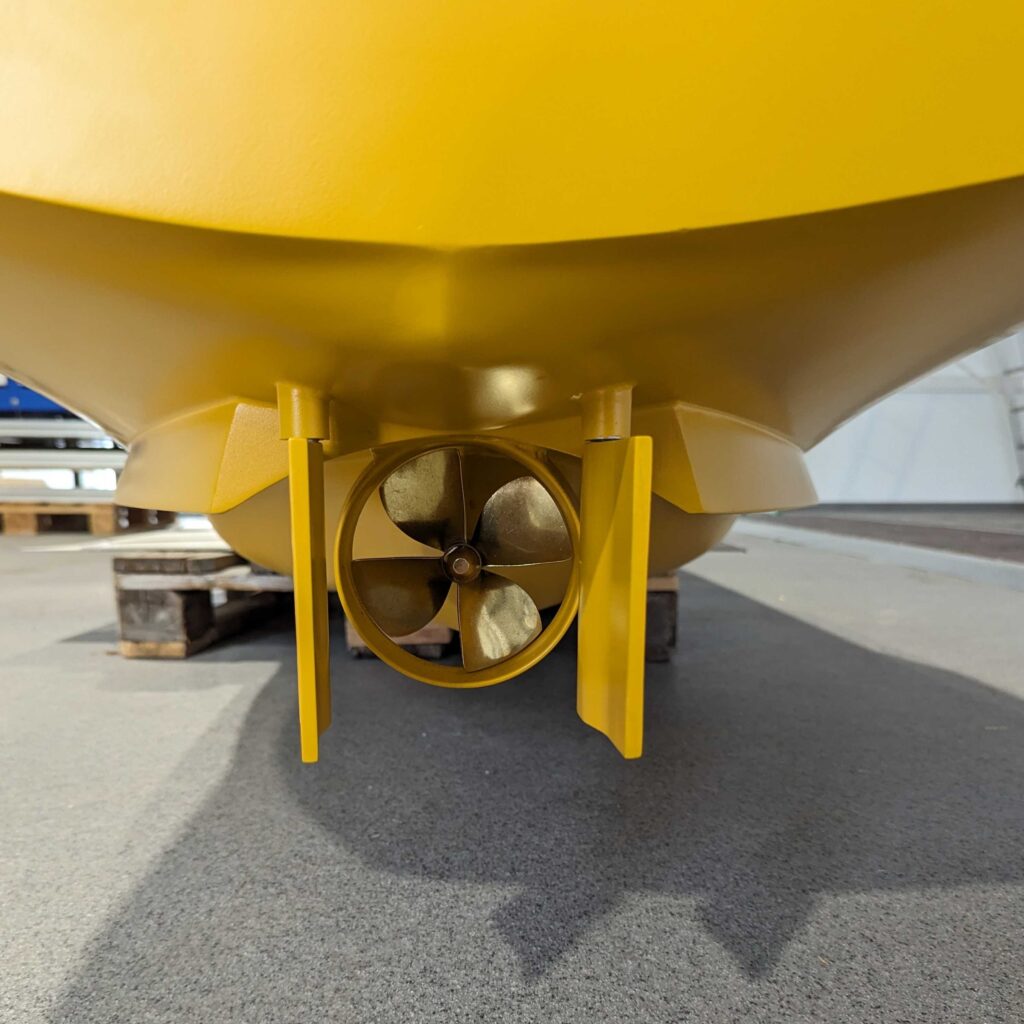
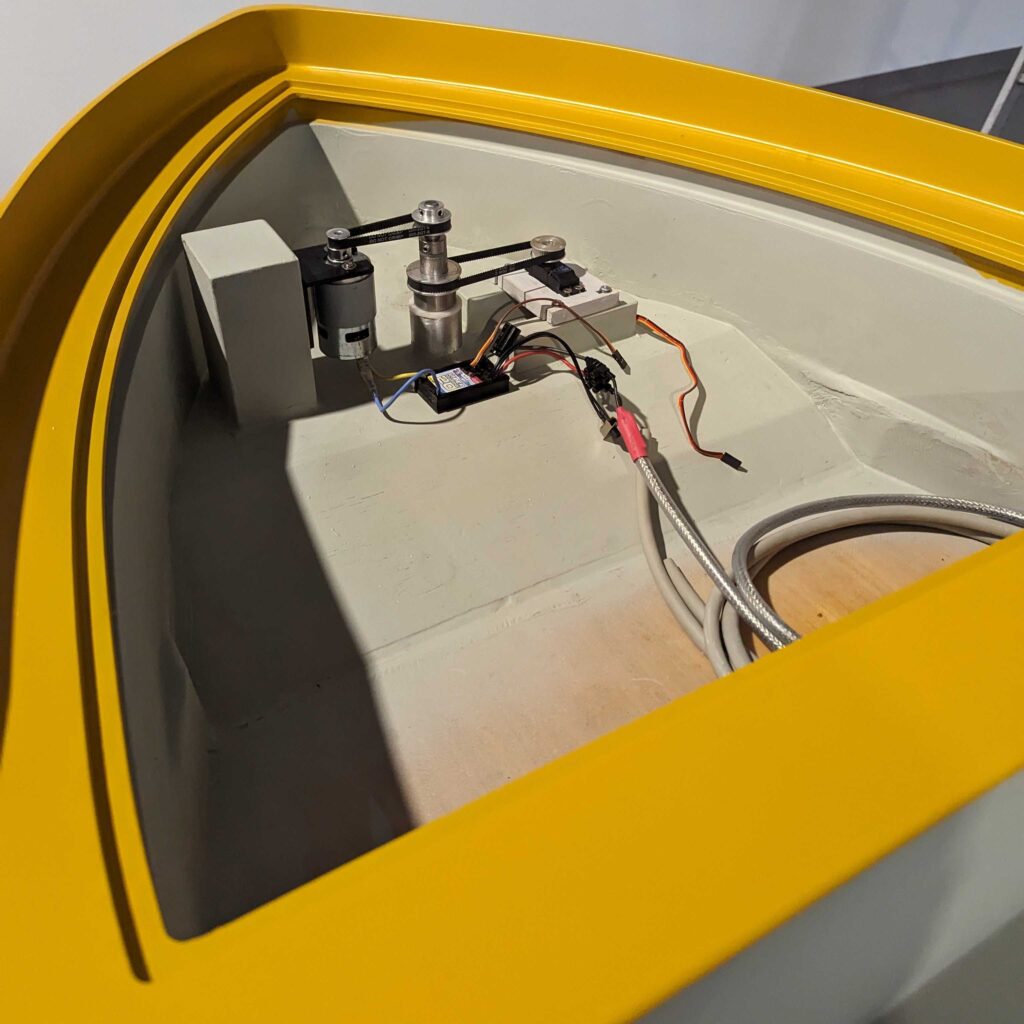
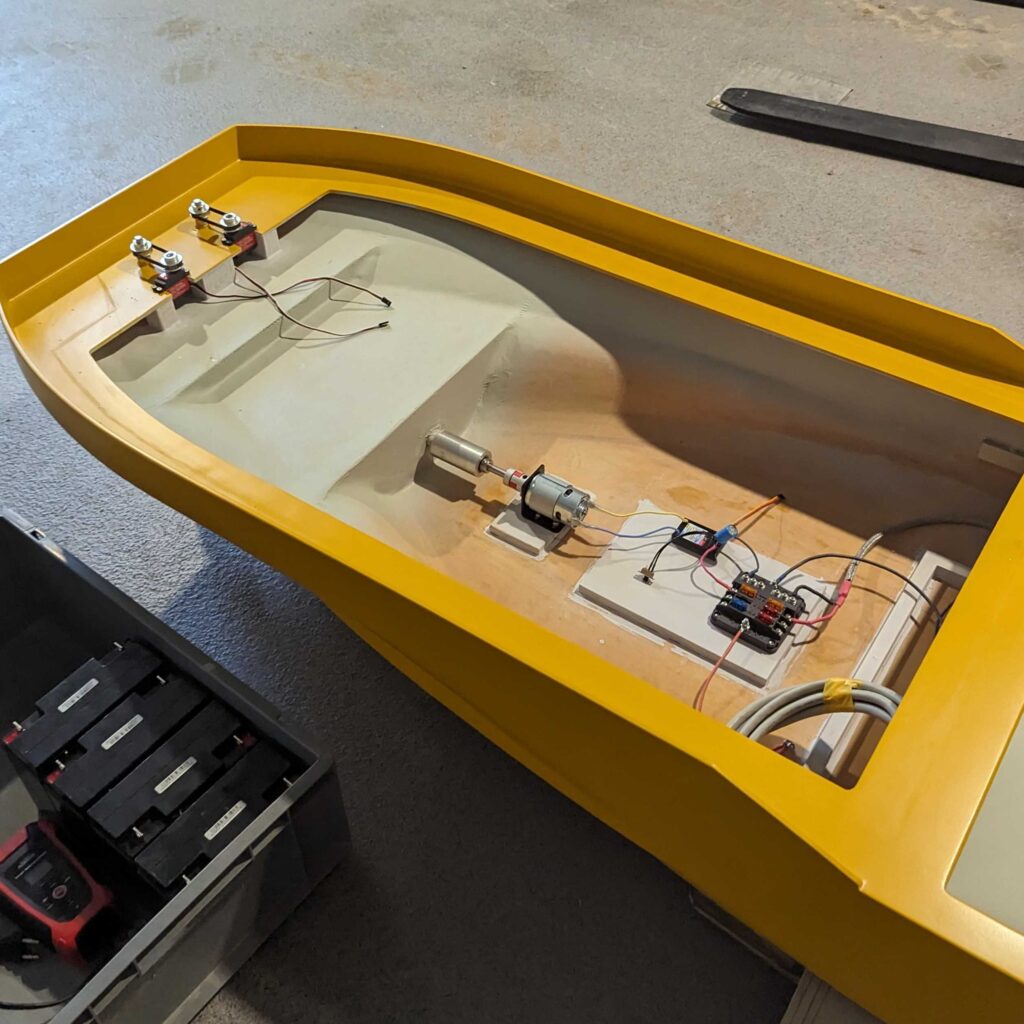
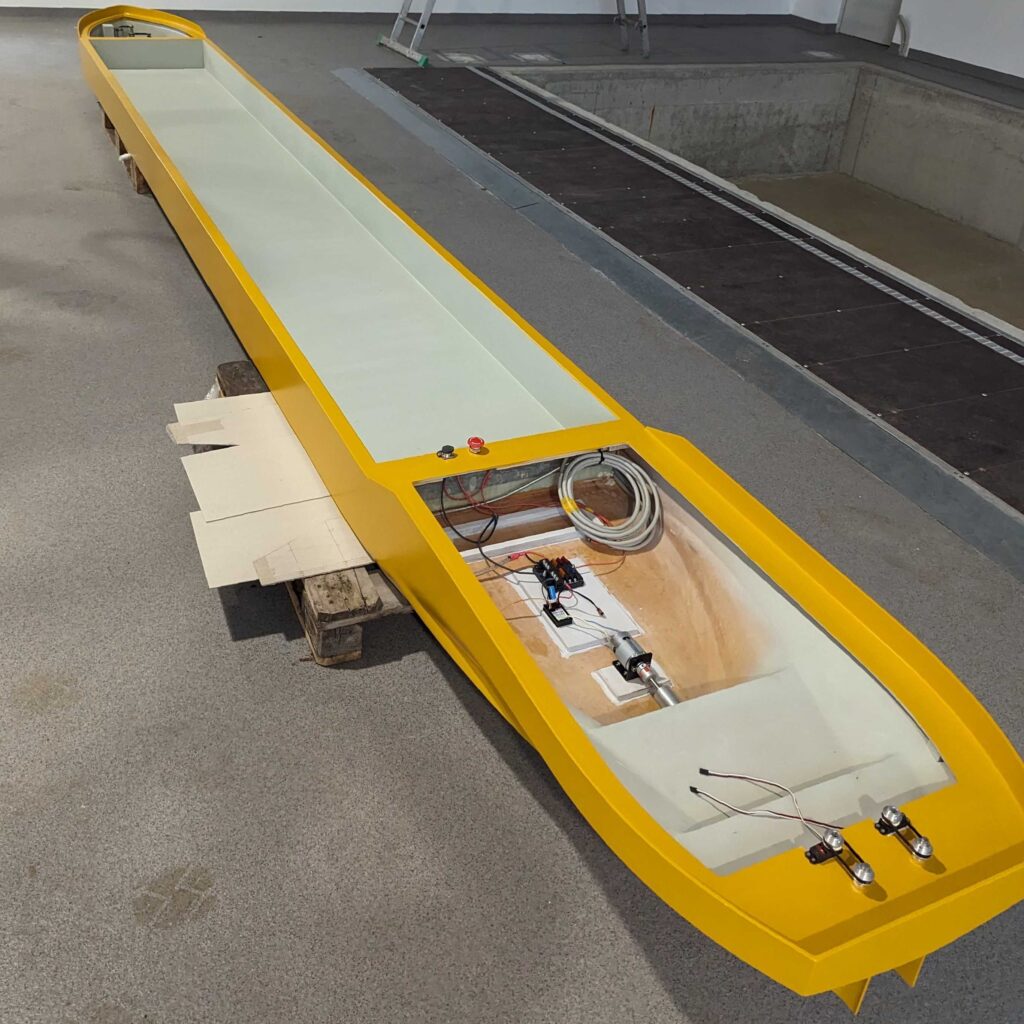
The HaFoLa has two model ships on a 1:16 scale. These are a Type 1 large motor vessel (GMS) and a large container motor vessel (JOWI class), as they are among the most common inland container vessels.
In addition, solutions for handling other types of cargo, such as liquid cargo, can also be investigated using these two model ships.
For other research topics, various ship models already available at the DST can also be utilized.
Digital Lab
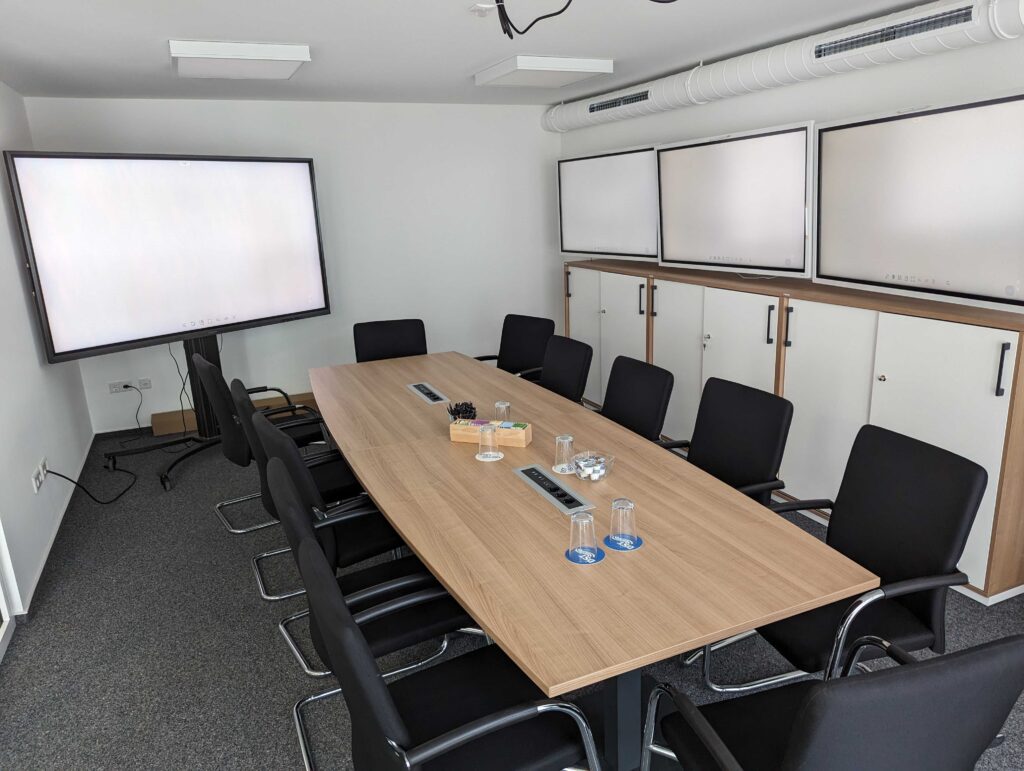
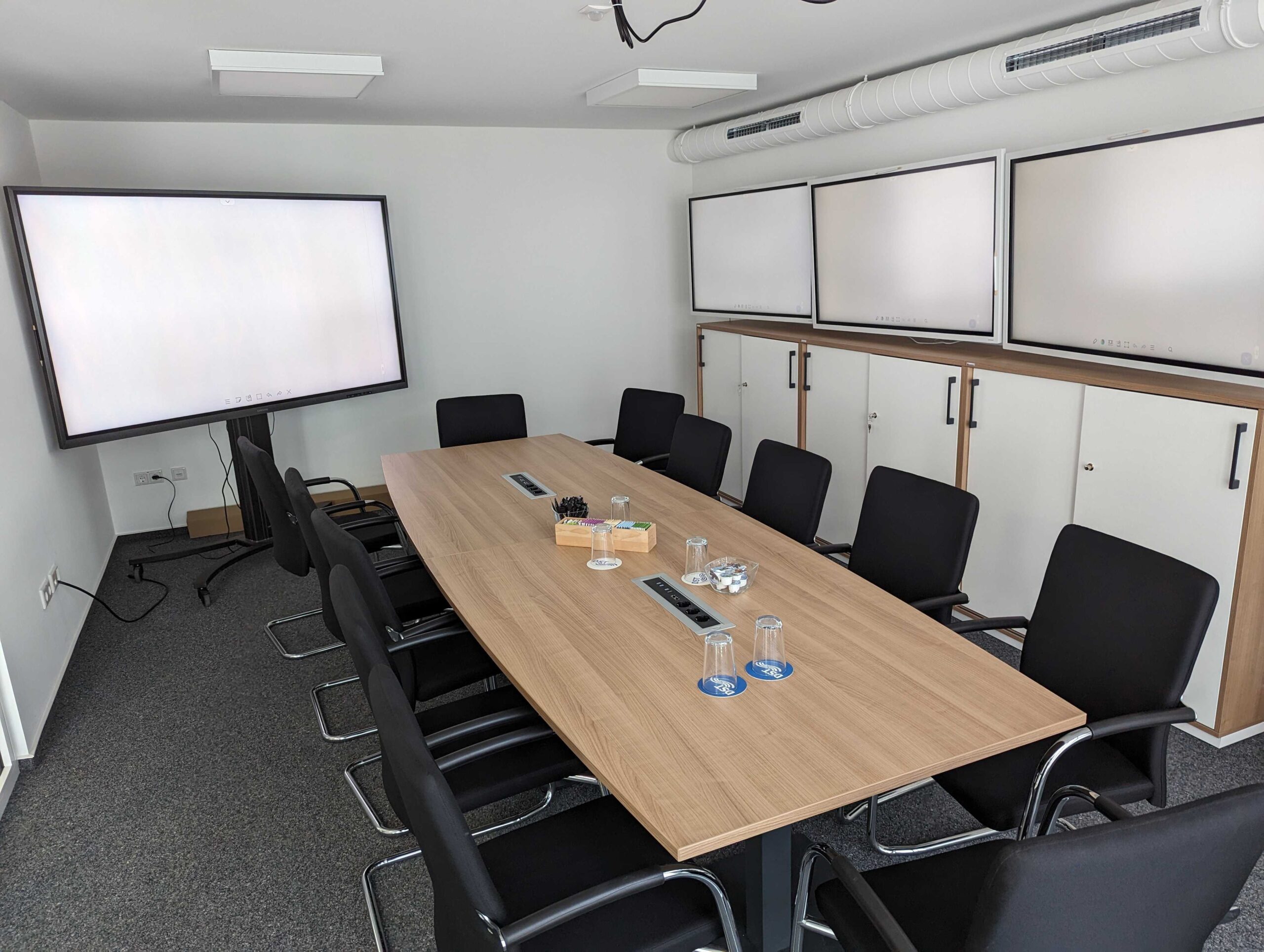
The Digital Lab is an experimental and interactive space where the hardware and software infrastructure for future digitalization projects—particularly the digital mapping of port and cargo handling processes—is being developed.
Accordingly, it is extensively equipped with state-of-the-art technology. Numerous digital flipcharts, tablets/handhelds, and VR/AR headsets offer an immersive experience for research, presentations, training, and other activities. Camera systems and conference technology enable the monitoring of test series—both within the HaFoLa itself and from any location worldwide.
In the associated server room, computationally intensive simulations can also be performed and large amounts of data stored.
Projekte
CoboTank – Robot-assisted automation of the loading of inland tankers
The IHATEC-II research project CoboTank aims to develop and test collaborative and automated robotic systems to support the loading process of inland tankers. The project is implementing, on the one hand, partial automation using a collaborative robotic system (CoboTank) and, on the other hand, a fully automated refueling process using a robot (RoboTank). Learn more
MultiRELOAD – Port solutions for efficient, effective and sustainable multimodality
The European research project MultiRELOAD is developing solutions for the digitization and automation of inland ports along the Rhine and Danube rivers. It aims to enhance the competitiveness of more sustainable modes of transport—rail and waterways—and to foster collaboration among multimodal freight hubs. The project includes the inland ports of Duisburg, Vienna, and Basel, as well as the Hungarian Association of Danube Ports. Learn more
SEAMLESS – Safe, Efficient and Autonomous: Multimodal Library of European Shortsea and inland Solutions
The EU project SEAMLESS is investigating the future of waterborne logistics using automated units on both water and land. To create a fully automated, economically viable, cost-effective, and resilient waterborne transport service, missing technological components and key technologies must be developed and adapted. Learn more
Gallerie
Miniature handling equipment
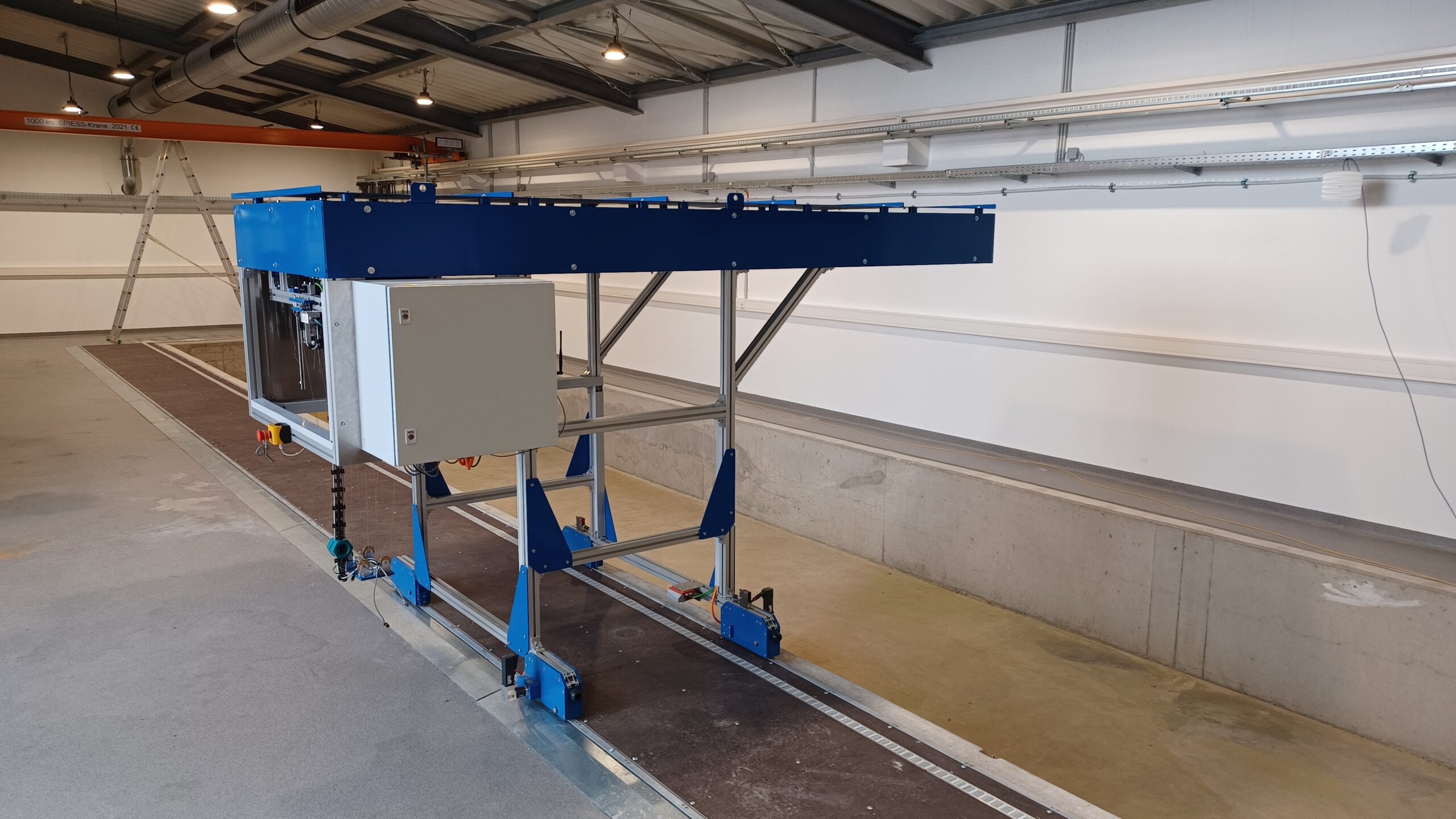
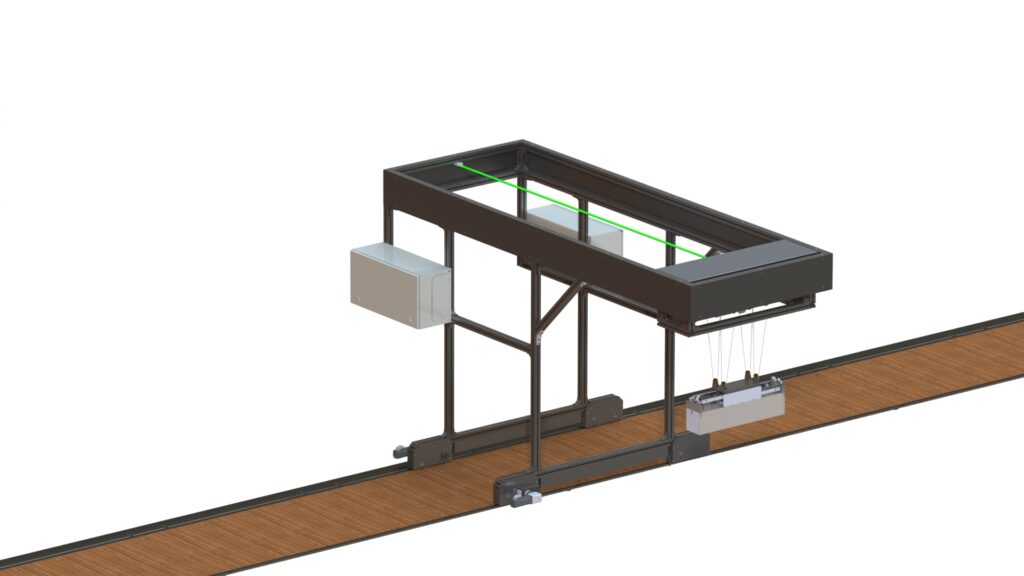
The scaled-down container gantry crane replicates the function and form of a real crane system on a 1:16 scale, enabling it to handle loads of up to 20 kilograms. Advanced control systems, sensor technology, and drive systems make it possible to develop highly automated handling processes. For example, the container gantry crane is equipped with position/displacement measurement systems on all axes, as well as a 3D camera and a LiDAR scanner for monitoring the work area.
Container gantry
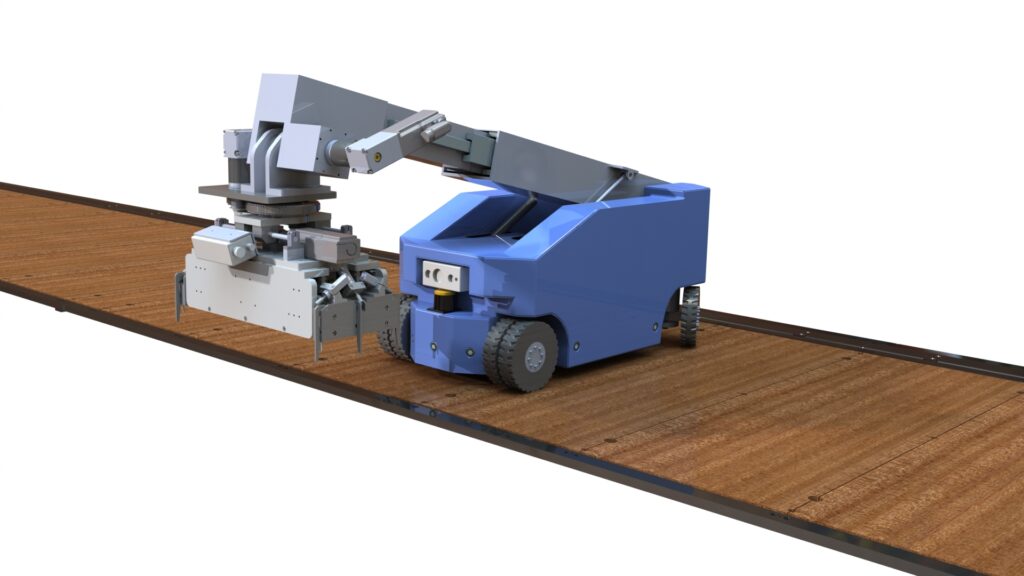
Reach stacker
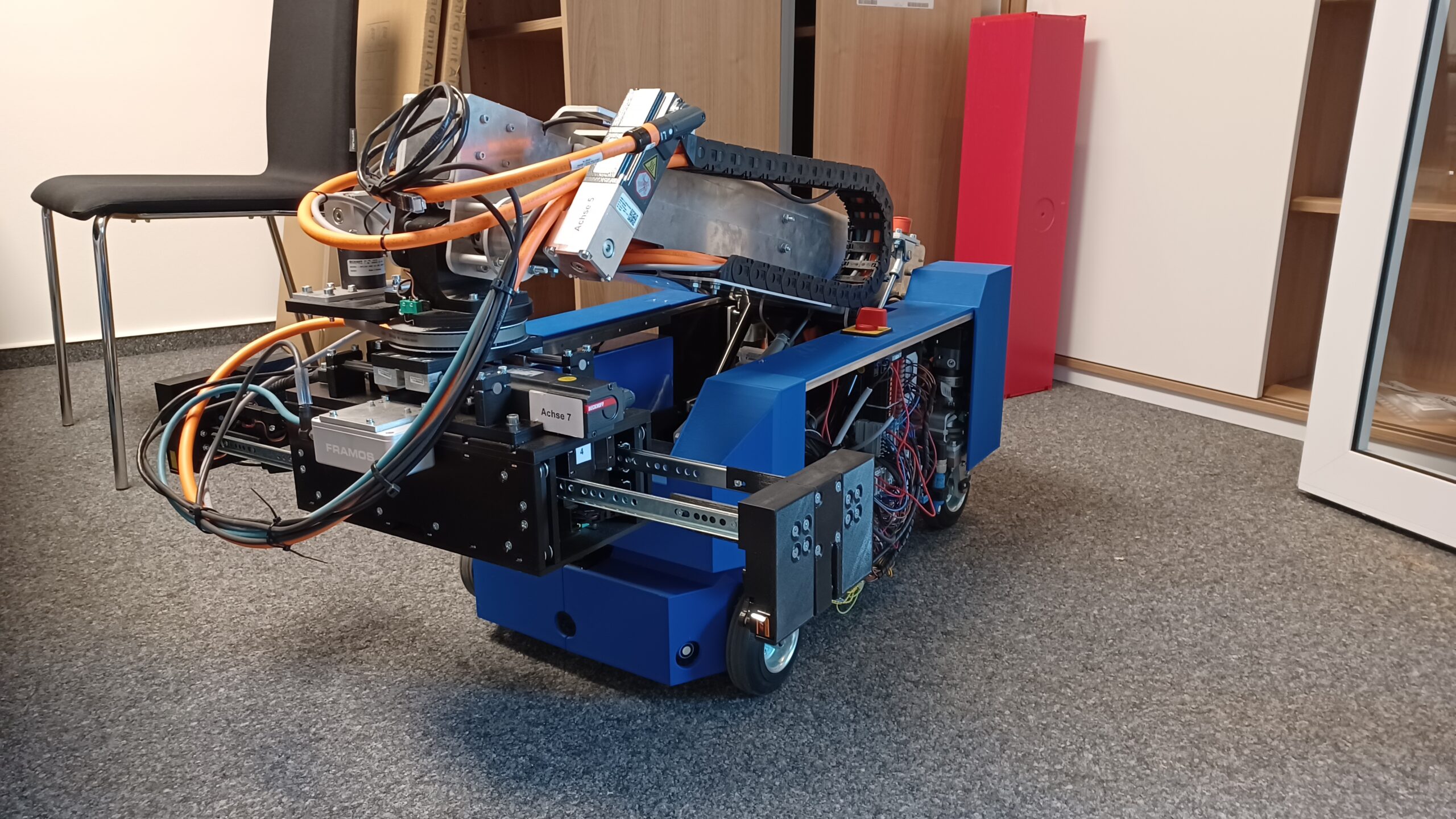
The scaled-down reachstacker is a material-handling machine that can move freely within the HaFoLa test environment. Functionally, the scaled-down system closely replicates the real system. However, due to its extensive technical equipment, its visual appearance differs from that of the real system. To enable future test series on highly automated container handling, the reachstacker is equipped with a 3D camera, a LiDAR scanner, IMUs, and multiple ultrasonic sensors for environmental sensing and automated navigation. Automated container handling is enabled by an additional 3D camera mounted on the boom.
The scaled-down slewing crane enables the conduct of test series for the handling of containers, bulk cargo, and general cargo. Its kinematic structure allows for versatile applications: On the one hand, the load can be moved along a double-rope guide. On the other hand, the rope guide can be fully retracted, thereby creating a rigid kinematic arm structure—similar to that of a hydraulic crane. The slewing crane is equipped with comprehensive control systems, sensors, and drive technology, enabling research into highly automated handling operations using the slewing crane.