

NOVA
Autonomous and Smart: The Research Vessel NOVA
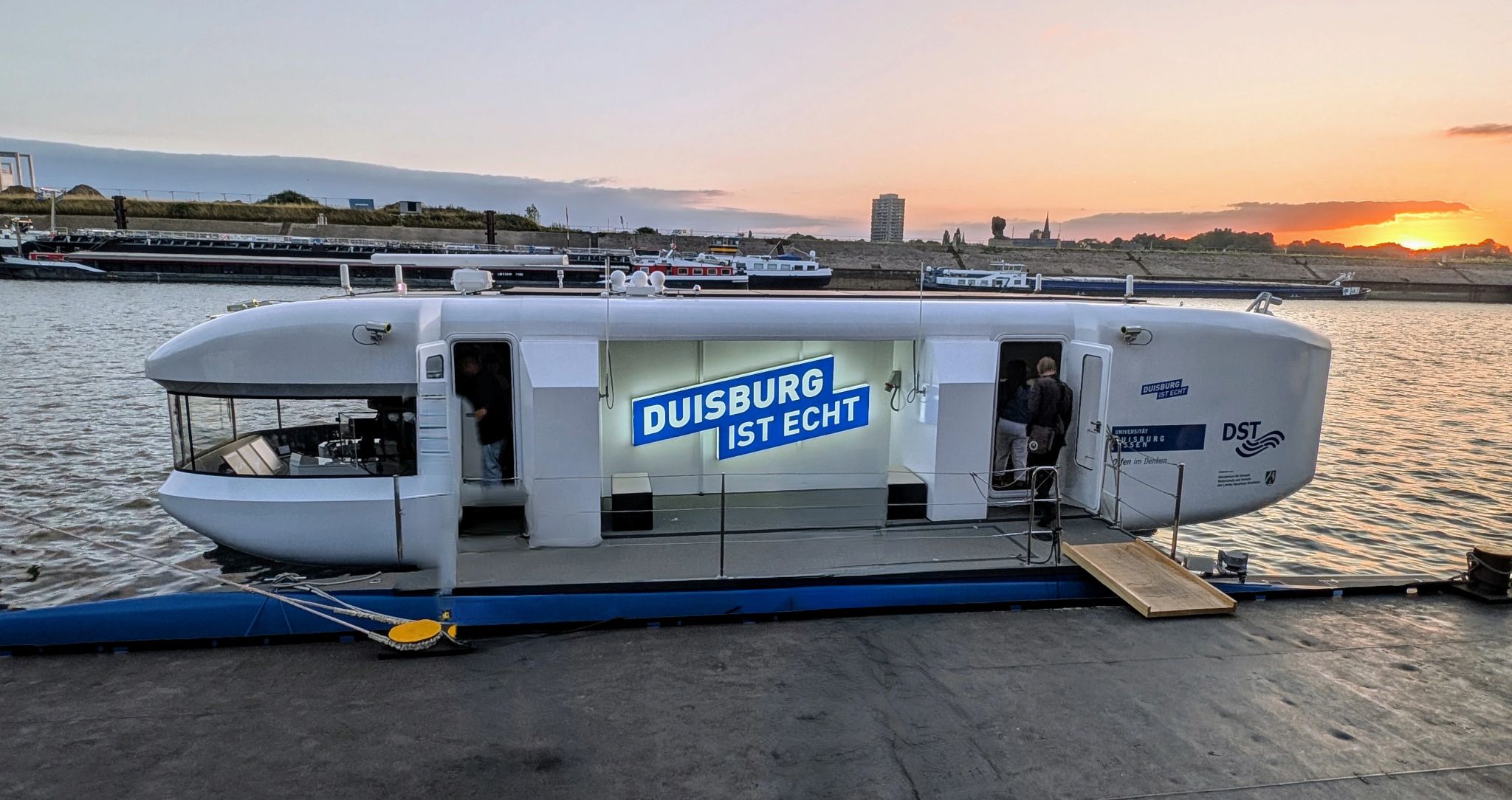
Research into new technologies for automation and emission reduction is one of the key priorities for the future of inland waterway transport. The research vessel NOVA now serves as a test platform for the development and testing of automated navigation, zero-emission propulsion systems, and smart ship systems.
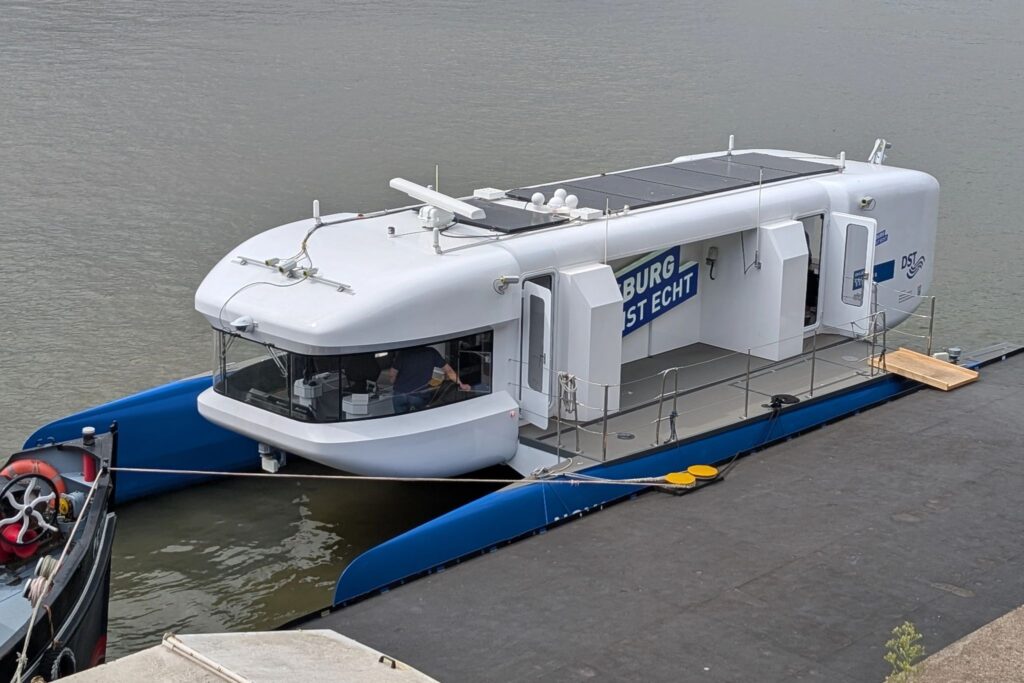
Inland waterway transport is a reliable, safe, and environmentally friendly mode of transport and plays a central role in sustainable freight transport. Current challenges such as a shortage of skilled workers, climate change, and the energy transition are increasing the need for innovative technical solutions. In particular, automated and, in the future, autonomous navigation, as well as zero-emission propulsion systems, are considered key technologies for the future development of inland waterway transport. Against this backdrop, the research vessel NOVA was designed and built as a flexible test platform for the development and testing of automated navigation functions, zero-emission propulsion systems, and intelligent ship systems.
The research vessel NOVA pursues the following objectives in particular:
- the development and testing of advanced automation solutions that enable semi-automated vessel operation,
- the design of intelligent assistance systems that simplify vessel operation and make it more efficient, and
- the investigation and further development of zero-emission propulsion concepts for inland waterway transport.
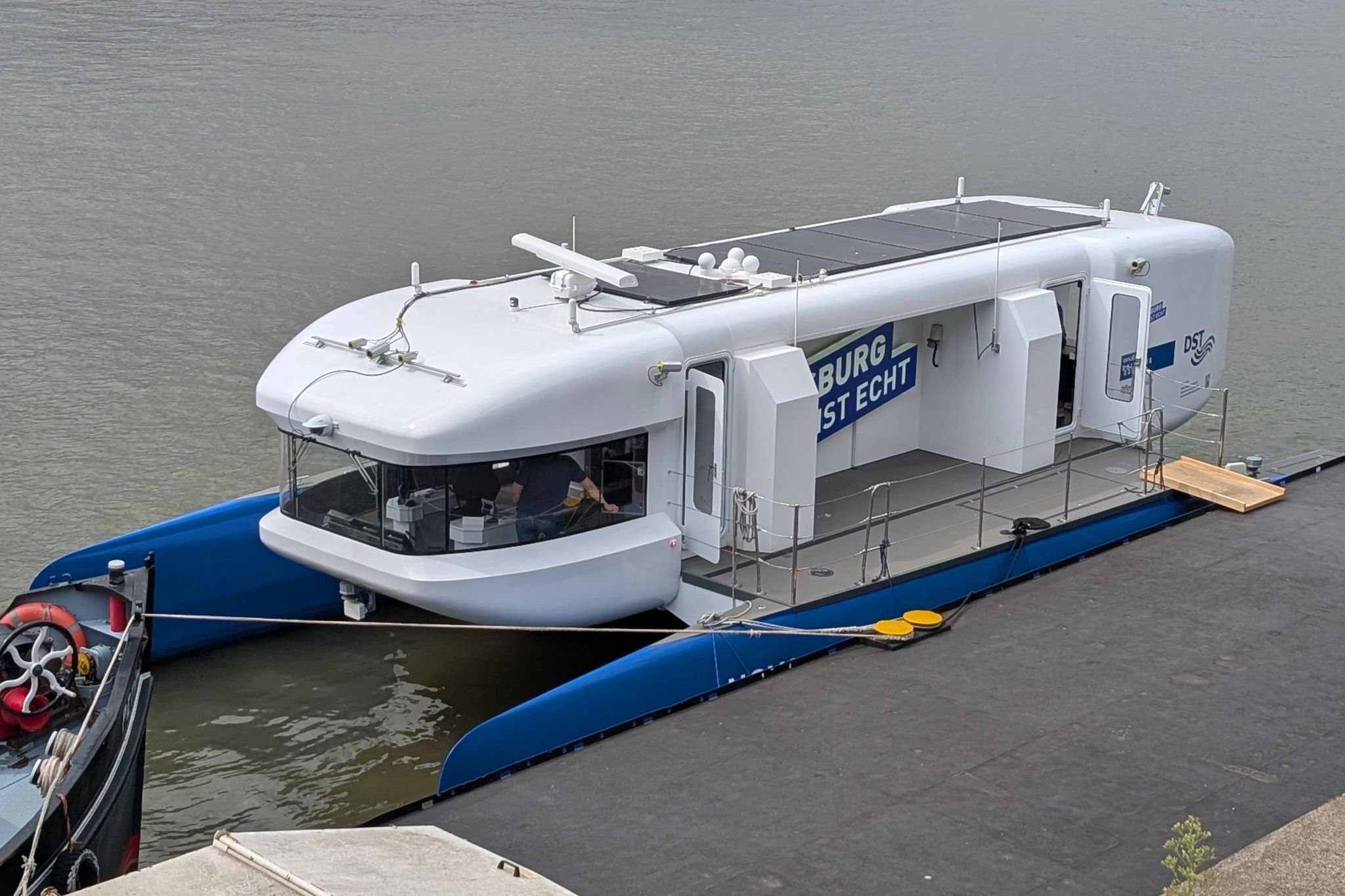
Technically, the NOVA is designed as a modern, fully electric vessel. An integrated energy management system supplies not only the propulsion system but also the lighting, control systems, and other onboard systems entirely with electricity. This allows for detailed analysis of energy consumption, load distribution, and various operating strategies. Aspects such as range, charging processes, and the reliability of the power supply play a central role in this.
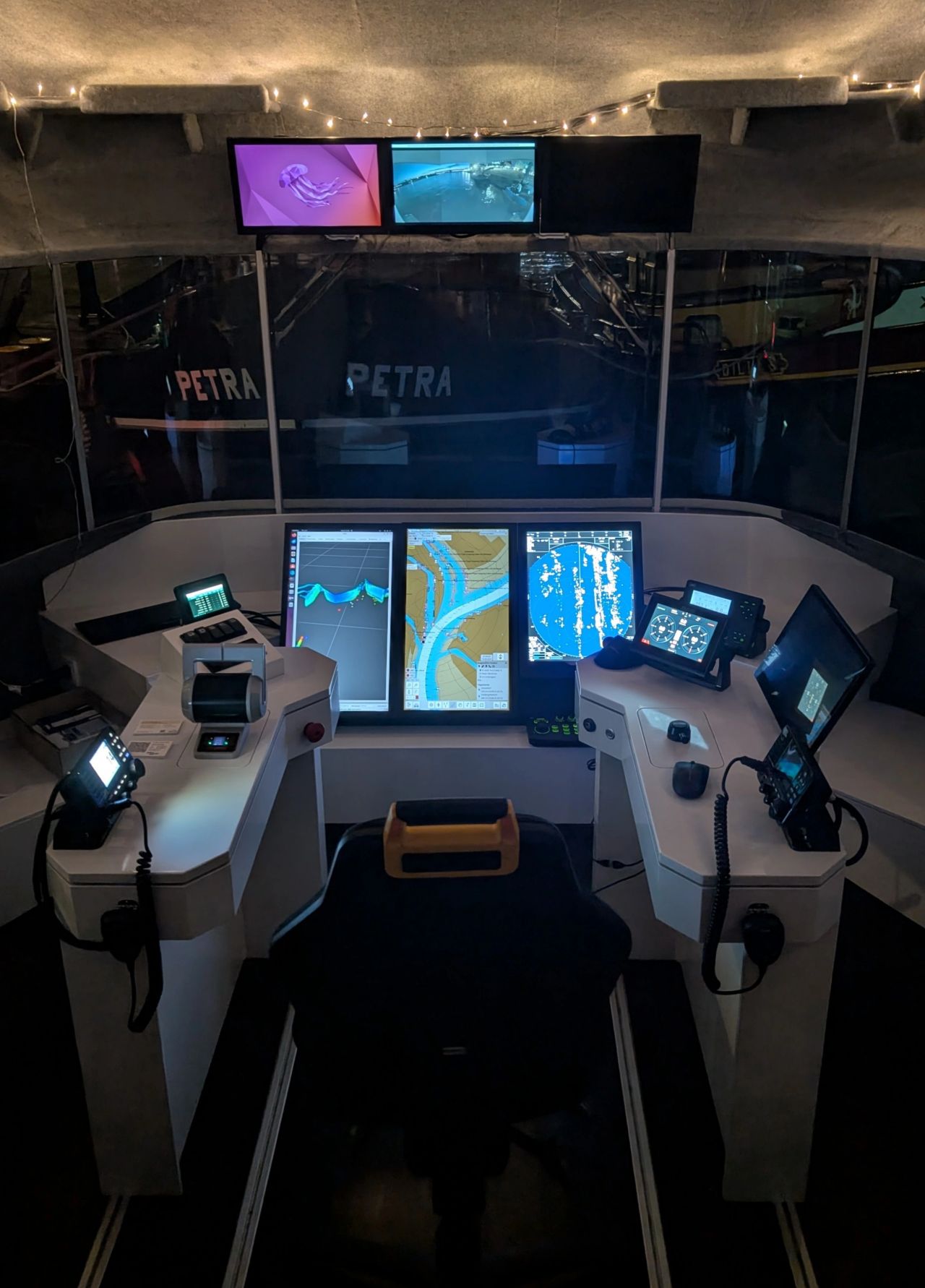
For research into automated driving functions, the NOVA is equipped with a comprehensive sensor system as well as high-performance communication and control systems. During the voyage, data on navigation, obstacle detection, and optimal lane guidance can be collected. New automation and assistance systems can thus be tested and evaluated under real-world conditions.
As a research vessel, the NOVA offers unique advantages: Unlike commercially operated vessels, it is available exclusively for scientific research at all times, thereby enabling short development cycles. Its modular design also allows for the flexible integration of new technologies—such as alternative energy storage systems or propulsion concepts. The NOVA thus serves as a vital bridge between laboratory tests and simulations on the one hand and real-world operations on the other, setting new standards for sustainable inland waterway shipping.
The research vessel was initiated, developed, and built in cooperation between the University of Duisburg-Essen, the Institute for Sustainable and Autonomous Maritime Systems (INAM), and the Development Center for Ship Technology and Transport Systems (DST). The project was funded by the Ministry of the Environment, Nature Conservation, and Transport of the State of North Rhine-Westphalia. In May 2025, the ship was christened in a festive ceremony.
Our NOVA Galery!